Places to Visit

The Aron and Agira’s Jewish memory

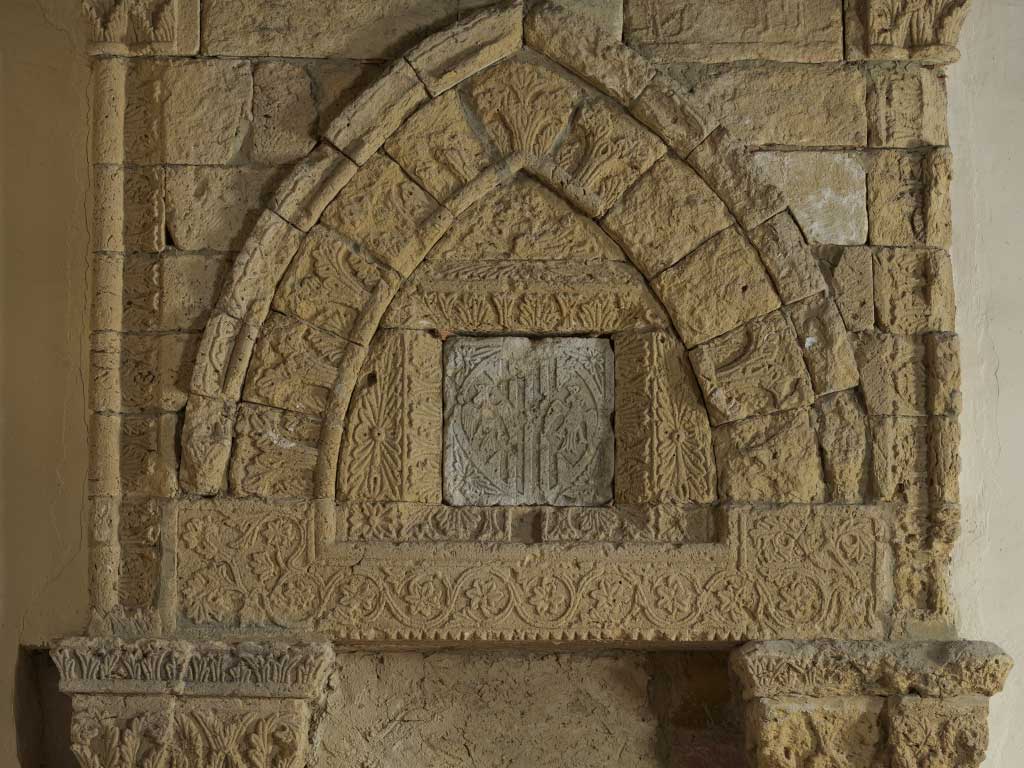
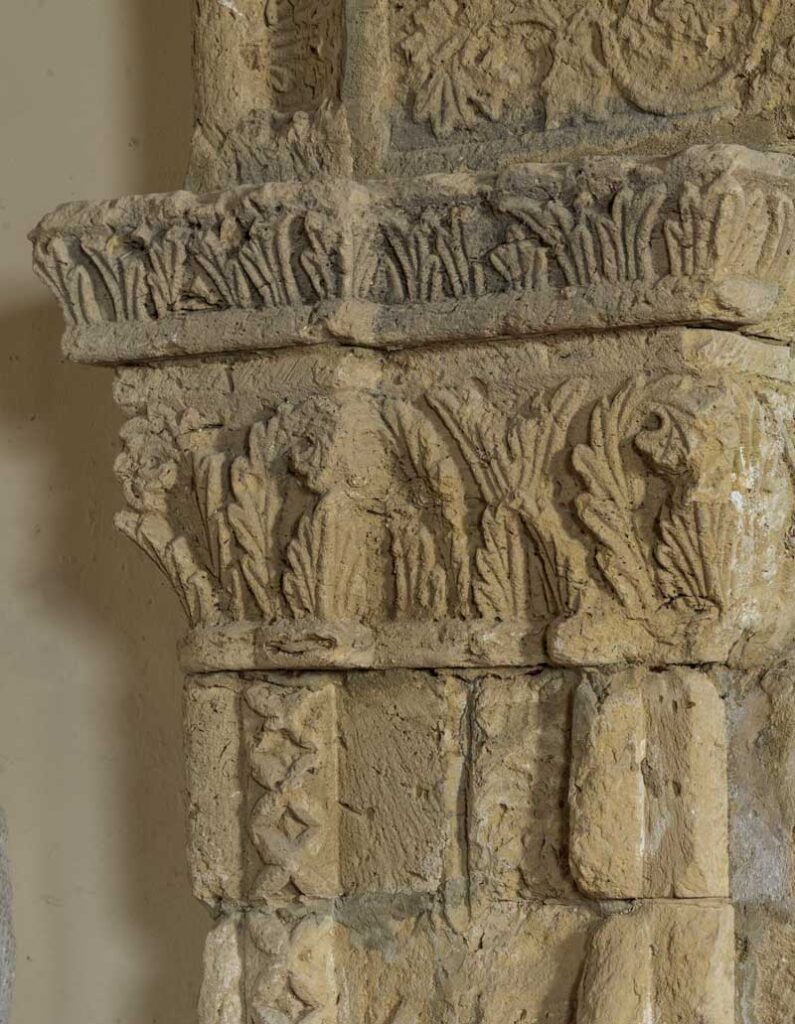
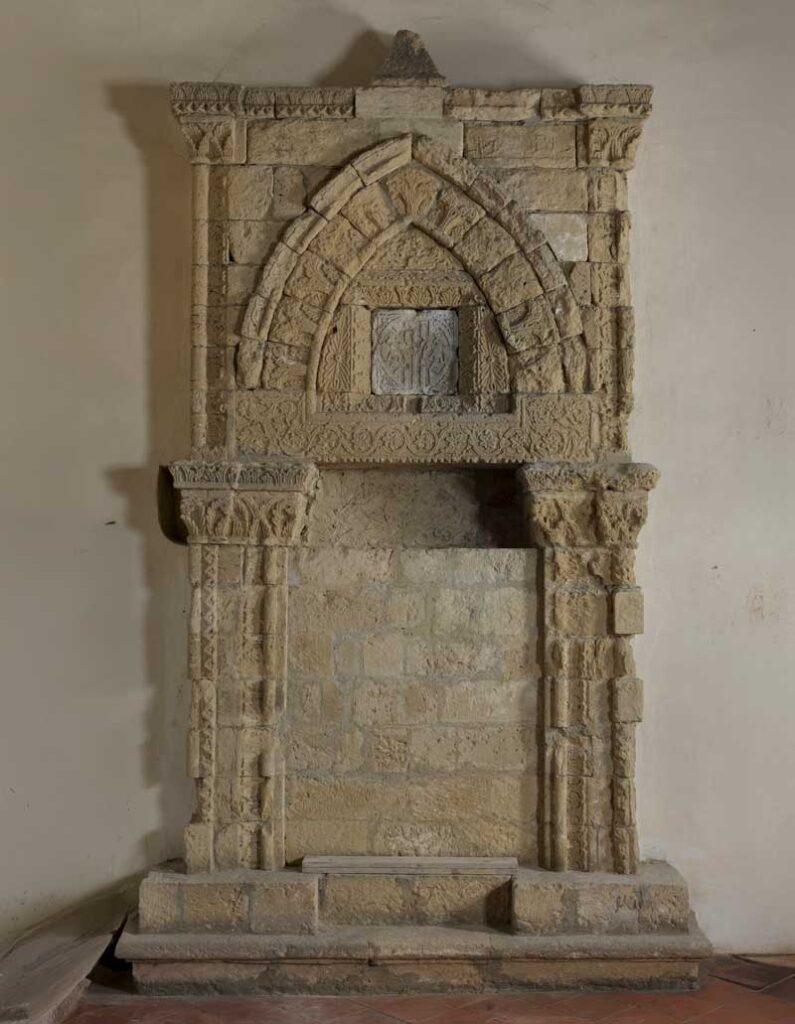
Among the most precious testimonies of Agira’s Jewish past is the Aron Ha Kodesh, the Holy Ark of the medieval synagogue—a rare and extraordinary example of 15th-century Jewish stone art.

Now housed within the Collegiate Church of the Most Holy Savior, the Aron bears witness to an ancient chapter of coexistence and culture, deeply rooted in the heart of medieval Sicily.

Origins and discovery

The Aron Ha Kodesh, dating back to 1454 AD, was discovered among the ruins of an ancient oratory located about one hundred meters from the Collegiate Church of the Most Holy Savior, in the district that until the 15th century was home to Agira’s thriving Jewish community

For a long time, this artifact was mistakenly identified as a simple stone portal. Only later, thanks to the studies of scholars and archaeologists, was it recognized as the Holy Ark that once housed the Torah scrolls.

Meaning and inscription

Carved in stone with remarkable refinement and symbolic rigor, the Aron bears the biblical inscription:

House of Jacob, come, let us walk in the light of the Lord

The final letters of the inscription, interpreted according to Hebrew numerical valuesgematriaallow the structure to be dated to the year 5214 of the Jewish calendar, corresponding to 1454 AD.

At the center of the decoration appears the Aragonese coat of arms, referring to the period in which King Alfonso of Aragon granted Jews freedom of worship after years of restrictions.

This inscription, together with the quality of the stone and the monumental craftsmanship, makes the Aron an artifact of exceptional historical and religious value.

A unique work in the Mediterranean

While most synagogue Arks in Europe were made of wood, the Aron of Agira is entirely constructed in stone—a feature that makes it an absolute rarity.

As scholar Nicolò Bucaria wrote in Kalòs – Arte in Sicilia (Year XIII, no. 2, April–June 2001): “A true rarity throughout the entire Mediterranean area.”

Attributed to local craftsmen influenced by Iberian models, the work reflects the refined cultural integration that characterized Sicily at the time—a true crossroads of peoples and religions.

Expulsion and memory

Only a few decades after the Aron was created, the history of Agira’s Jewish community came to an abrupt end.

In 1492, with the Edict of Granada issued by Ferdinand the Catholic, all Jews living in territories under Spanish rule were forced to leave Sicily.

The ancient synagogue of Agira was abandoned, but the Aron—miraculously preserved—today stands as a symbol of recovered memory, bearing witness to a coexistence erased yet never forgotten.

Preservation and future

In recent years, a restoration and enhancement project has been launched with the aim of returning the Aron to its original location and creating a permanent center for Jewish studies.

This initiative seeks to establish Agira as a reference point for rediscovering Jewish heritage in Sicily and to promote intercultural dialogue through the memory of place.

In this sense, the Aron Ha Kodesh is not merely an artistic artifact, but a bridge between religions, eras, and identities.

Visits and heritage enhancement

Every admission ticket contributes to the maintenance and protection of these sites, made accessible through the shared efforts of the local community. Visiting the churches of Agira means taking part in a collective act of preservation and cultural enhancement.